
With the U.S. poised to face over 86,000 physician vacancies by 2036, physician recruitment has become a top issue for healthcare organizations. Open physician vacancies drain financial resources, strain existing staff, and compromise patient access to care. While every organization feels this pressure, the most successful ones understand that a strategic, modernized approach to physician recruitment isn’t just a luxury; it’s the fundamental key to stability and growth.
Beyond the playbook of job boards and expensive agencies lies a world of creative sourcing, intelligent technology, and smart partner management. This blog will explore actionable strategies to not only attract top-tier talent but also to control costs, enhance retention, and build a sustainable physician pipeline for the future. The goal is to transform your recruitment process from a constant reactive scramble into a proactive, data-driven engine for your organization’s success.
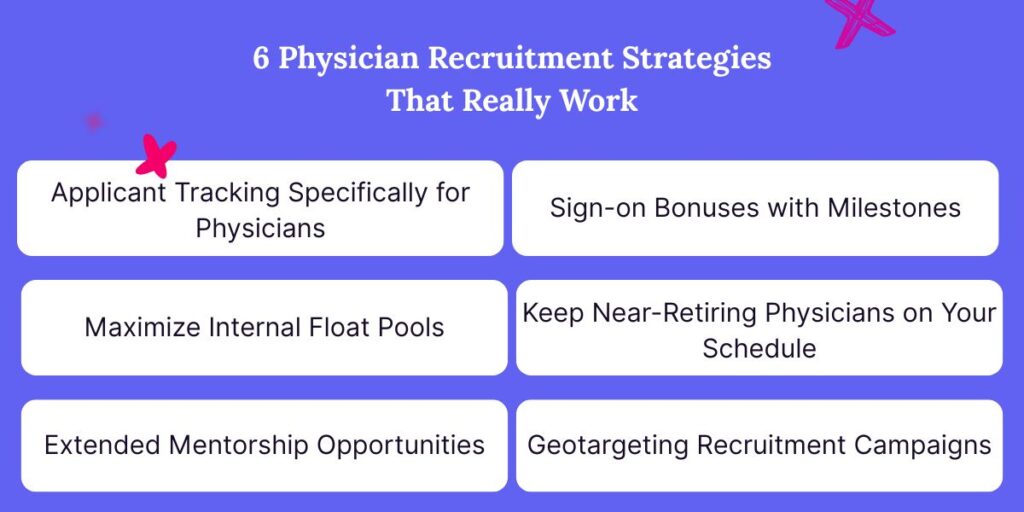
Use Applicant Tracking Specifically for Physicians
Generic ATS systems or even cumbersome spreadsheets are not enough to build a robust physician pipeline. If you haven’t already, your organization should consider implementing a system designed specifically for the medical field (we offer Syncx’s Perm ATS and there are a variety available from other vendors). These types of tools tailor the entire recruitment workflow to the unique needs of sourcing and hiring physicians, meaning you don’t need to configure an ATS to perform specifically for your industry.
A dedicated physician ATS saves invaluable time, reduces the risk of human error, and provides data-driven insights to continuously refine your recruitment strategy, ensuring you never lose a top candidate to administrative delays. Here’s what they can do:
- Leverage Physician-Specific Fields: A system like Syncx Perm ATS will automatically track critical data that matters for physicians, such as board certification dates, state licensure status, and visa type (J-1, H-1B). This eliminates manual note-taking and ensures you’re filtering candidates based on the most relevant criteria.
- Streamline Credentialing Handoff: The best systems integrate with or prepare for the credentialing process. Key documents collected during recruitment can be seamlessly transferred, drastically reducing the administrative burden on the physician and your staff after an offer is accepted.
- Gain Specialty-Specific Insights: Use the platform’s analytics to track which sources yield the best candidates for specific specialties. You can identify which residency programs produce your most successful hires and which job boards deliver the highest volume of qualified applicants, allowing you to allocate your recruitment budget intelligently.
- Automate Communication Sequences: Set up automated, personalized email sequences triggered by specific actions. For instance, when a highly qualified candidate applies, they automatically receive a message from the Department Chair within 24 hours.
Maximize Internal Float Pools
Proactively develop and nurture an internal network of per-diem or locum tenens physicians to fill scheduling gaps. This strategy improves flexibility, controls labor costs, and serves as a powerful “try-before-you-buy” pipeline for permanent recruitment. A robust internal float pool is a triple-win: it provides immediate coverage for vacancies, reduces reliance on the most expensive, major agencies, and creates a proven, low-risk candidate pipeline for your future full-time needs.
When you structure your float pool with clear compensation tiers and scheduling priorities, it helps you actively recruit from your own recently retired physicians, local semi-retired doctors, and even the spouses of relocating physicians who may be seeking flexible work. When a full-time position opens, your first action should be to offer it to qualified and high-performing members of your float pool. They already know your system, culture, and protocols, which slashes onboarding time and dramatically increases the likelihood of a successful long-term fit.
Finally, you can encourage float physicians to provide informal feedback on different departments and clinics. They offer a unique, ground-level perspective on workflow challenges, team dynamics, and opportunities for improvement that permanent staff might not see.
Extended Mentorship Opportunities
Formal, long-term mentorship programs are both a great selling point for new physicians and a powerful strategy for retention. Such programs pair new physicians with experienced, well-integrated peers for a minimum of one year. This proactive support system is designed to accelerate integration, foster professional growth, and combat first-year isolation.
A structured, extended mentorship directly addresses physician burnout and improves retention by providing a trusted, internal resource for navigating both clinical systems and organizational culture. It demonstrates a genuine investment in the physician’s long-term success and well-being, transforming them from a new hire into a committed, connected team member.
- Formally match new hires with a mentor outside their direct chain of command before their start date.
- Structure the relationship with clear objectives, including goals for professional development, community integration, and informal feedback.
- Compensate mentors for their time and expertise, recognizing this as a critical organizational responsibility, not an extra voluntary task.
- Run the program for a minimum of one year, and ideally longer, potentially with new mentor matches when it makes sense to do so.
Sign-on Bonuses with Milestones
Restructure the traditional lump-sum sign-on bonus into a series of smaller, milestone-based payments distributed over the first 12-24 months of employment. Your bonuses will transform from a simple hiring transaction into an ongoing investment in the physician’s successful integration and career.
This strategy significantly enhances the retention power of the bonus by creating multiple “touch points” of positive reinforcement. It discourages candidates who are solely motivated by the initial cash payout and instead attracts those committed to a long-term partnership, while also providing financial stability throughout the critical first years. You can implement it by tying payments to simple milestones such as the 6-month mark, the one-year anniversary, or more qualitative ones like the completion of a quality or patient satisfaction initiative.
Keep Near-Retiring Physicians on Your Schedule
This is more of a retention strategy admittedly, but because near-retiring physicians are such a valuable source of medical and historical knowledge, ensuring they remain in rotation for as long as possible will strengthen your staffing program substantially. You can do this by offering flexible, phased retirement plans for senior physicians instead of accepting a clean break. One easy way to do this is with internal float pool options, which allow doctors to work on their on schedule and at their own pace.
This strategy turns an impending retirement from an operational risk into a strategic advantage. It prevents the massive loss of revenue and patient confidence that can follow a senior physician’s sudden departure, while also honoring the legacy of your long-serving staff and providing them with a graceful transition into retirement.
Work with Smaller Agencies
When external recruitment support is necessary, strategically partner with smaller, niche recruiting agencies instead of defaulting to large firms. These boutique agencies often provide a more dedicated, hands-on service, leveraging their extensive experience to build stronger relationships and deliver better results.
Most importantly, smaller agencies thrive on their reputation and success stories, not just their volume. This means they are inherently motivated to work harder and more creatively to fill your roles. Their leadership and recruiters often have prior experience from the larger agencies, giving you access to the same expertise but with a heightened level of personal investment, tenacity, and flexibility that can lead to a better cultural and clinical fit.
You can research and vet smaller agencies that specialize in your specific physician specialties or geographic region, or consider a vendor neutral managed service provider that has a wide roster of small agencies.
FAQs about Physician Recruitment
Should you use a physician recruiter?
Yes, but the model matters. An internal recruiter using a dedicated physician ATS provides the best blend of institutional knowledge and specialized tools. For locums coverage, a vendor-neutral Managed Service Provider (MSP) is the most cost-effective and streamlined approach, as it manages multiple agencies for you without the high markups of a single traditional agency.
What are the disadvantages of using a recruitment agency?
Traditional agencies are often the most expensive option due to high commission fees (20-30% of salary). They can also lack deep knowledge of your specific organizational culture and may prioritize a quick placement over a perfect long-term fit, as their incentive is the placement fee.
How can you control physician recruitment costs?
The most effective strategy is a multi-pronged approach:
- Invest in Technology: Use a physician-specific ATS to improve direct hiring efficiency.
- Optimize Locums Spending: Partner with a vendor-neutral MSP to manage locums agencies, creating competition and driving down rates.
- Build Internal Pipelines: Develop internal float pools and robust retention programs to reduce reliance on costly external solutions.
Ready to Transform Your Recruitment Strategy?
If you’re ready to replace costly, inefficient methods with a smarter, unified approach to physician recruitment and locums management, the Syncx platform is your solution. Discover how our physician-specific ATS and vendor-neutral MSP services work in tandem to give you control, reduce costs, and connect you with the right talent.
Schedule your personalized demo today to see the difference a truly integrated system can make.