2035 is going to be a crucial year for the healthcare workforce, The landscape of healthcare is shifting beneath our feet, propelled by an aging population, technological disruption, and the enduring lessons of a global pandemic. As we look toward 2035, the industry faces a critical crossroads: continue with strained, reactive staffing models that lead to burnout and instability, or fundamentally reimagine how we cultivate and sustain our people.
The next decade is a decisive window of opportunity. Proactive investment in workforce development is an absolute necessity for ensuring the resilience, quality, and continuity of care. The decisions we make today will determine whether our healthcare systems are prepared to meet the challenges of tomorrow.
In this article, we outline the top innovations that we believe will shape healthcare workforce development for the next decade. Let’s get started.
Why Is Workforce Development an Urgent Issue?
The need for robust workforce development is a present and escalating crisis. Healthcare organizations everywhere face a perfect storm: an aging clinical workforce nearing retirement, historically high burnout and attrition rates, and increasing patient demand driven by complex chronic conditions. This strain threatens the quality, accessibility, and financial stability of health systems globally.
The urgency is magnified for patients in remote and rural communities. According to the World Health Organization, approximately 50% of the world’s population lives in a rural or remote area, yet these regions are consistently underserved by healthcare professionals. Workforce shortages in these represent both operational challenges and a profound equity gap, where isolation compounds into limited access to all types of care, long wait times for specialists, and worse health outcomes. Proactive development of the workforce is therefore both an organizational imperative for sustainability and a moral obligation to ensure equitable care for all populations.
1. Internal Talent Marketplaces
Imagine if your greatest resource for solving staffing challenges was already inside your organization. Internal talent marketplaces like float pools give your current staff visibility and access to short-term projects, extra shifts, and even temporary roles in different departments. It’s a great way to to not only tap into a pre-vetted pool of providers familiar with your processes and systems, and it also permits a phased exit for providers who need a more flexible schedule or who are close to retiring, allowing you to retain crucial talent and expertise.
This approach has mutual benefits for leadership and providers. It allows administrators to fill sudden vacancies or support overwhelmed teams by tapping into a trusted, pre-credentialed internal pool. For employees, it offers coveted flexibility, new learning opportunities, and a greater sense of control over their careers, which are key drivers for improving retention and job satisfaction.
While an internal marketplace is excellent for maximizing the potential of your core team, it works best as part of a larger ecosystem. This is where a strategic managed services partner becomes invaluable. Partners like Syncx complement your internal efforts by providing a seamless external pipeline for specialized skills, high-volume needs, or long-term vacancies that exceed internal capacity. By integrating these two approaches, you create a truly resilient workforce model that optimizes your internal resources while having immediate, reliable access to a broader network of top-tier talent, ensuring continuity of care no matter what challenges arise.
2. Loan Repayment Support
A critical and often underutilized strategy for mitigating healthcare workforce shortages is direct loan repayment support offered by healthcare organizations themselves. While competitive salaries remain important, the staggering burden of educational debt (often exceeding $200,000 for physicians and $50,000 for nurses) is a decisive factor in career choices and longevity. By directly investing in debt relief, institutions can attract, retain, and empower the clinical talent essential for sustainable operations.
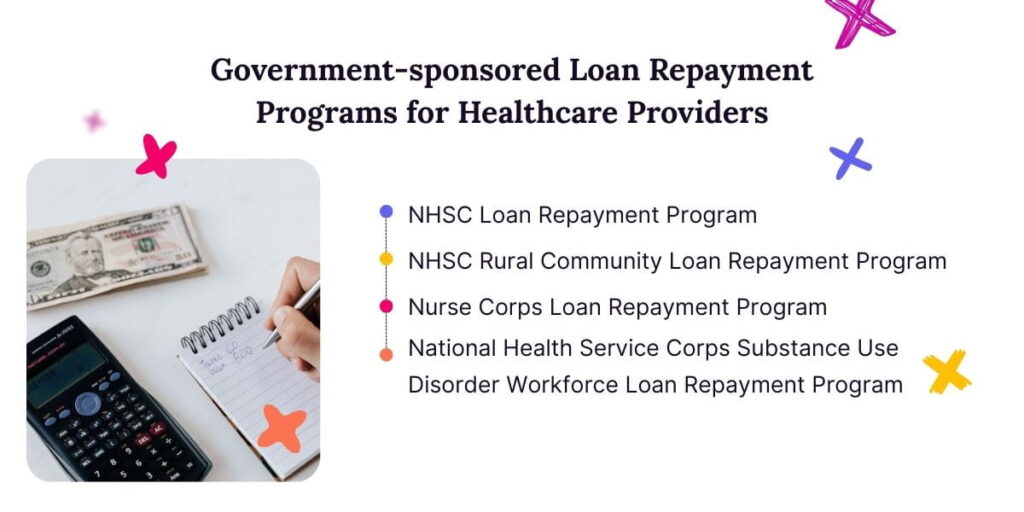
Government programs, such as the National Health Service Corps (NHSC) for doctors and certain nurses, and the NURSE Corps Loan Repayment Program, provide vital assistance but are inherently limited. These programs are highly competitive, often require multi-year commitments in specific, high-need facilities, and may not cover the full spectrum of clinical roles or geographic locations. Hospitals and health systems in suburban or urban areas, or those not designated as critical shortage facilities, frequently cannot rely on these programs to meet their staffing needs. This gap creates a powerful opportunity for direct institutional action.
A robust repayment benefit is a powerful differentiator in a tight labor market, signaling a deep commitment to employee well-being and long-term financial health. Moreover, structured repayment contributions, often tied to continued employment, incentivize clinicians to build their careers within the organization, reducing costly turnover. This is crucial, as replacing a single nurse can cost up to twice their annual salary. Forward-thinking healthcare organizations will embrace the benefits of loan repayment support to both attract and retain talent.
3. A “Human-in-the-loop” AI Recruiting Model
The future of healthcare workforce development hinges on AI development, but not replacing humans. Rather, effective models will create a powerful partnership between humans and machines. In a “Human-in-the-Loop” AI model, artificial intelligence takes on the heavy lifting of the initial recruiting process, including rapidly scanning vast databases to identify candidates whose skills, credentials, and experience perfectly match your specific requirements. This allows AI to handle the time-consuming sifting and sorting, crucial for filling gaps quickly.
The real magic happens when expert recruiters step in. They take that AI-curated content and apply the human touch: evaluating a candidate’s soft skills, cultural fit, and unique career aspirations. They ensure that the placement isn’t just a match on paper, but a lasting and successful partnership.
This model allows technology to handle the scale and speed, while dedicated professionals focus on the nuance and relationship-building that are essential for a truly effective workforce solution. It’s the best of both worlds, designed to get you the right talent, faster and more effectively than ever before.
4. Predictive Workforce Analytics
Gone are the days of reactive staffing, where organizations find themselves scrambling to fill a vacancy after it’s already occurred. The future belongs to predictive workforce analytics, a proactive approach that uses data to anticipate needs before they become crises.
By analyzing trends such as retirement eligibility, seasonal patient volume fluctuations, local market shifts, and even community health indicators, healthcare leaders can move from guesswork to foresight. Sophisticated modeling that paints a clear picture of future demand allows for strategic planning that ensures the right people are in the right places at the right time.
This data-driven strategy transforms workforce management from a cost center into a strategic asset. With a clear forecast in hand, administrators can build robust talent pipelines, develop targeted recruitment campaigns, and form strategic partnerships with staffing firms and educational institutions well in advance. Ultimately, predictive analytics empowers leaders to make informed, confident decisions that build a more resilient and responsive organization.
5. Contractor Upskilling
The modern healthcare workforce increasingly includes a vibrant community of skilled locum tenens and per-diem professionals. Viewing these talented individuals as temporary visitors is a missed opportunity. Instead, forward-thinking organizations should invest in “contract worker” upskilling initiatives.
By offering these valued team members access to specialized training on proprietary EHR systems, facility-specific protocols, or emerging clinical technologies, we do more than just streamline their onboarding. We actively integrate them into the care team, ensuring their contributions are seamless and immediately impactful from their very first shift. This commitment to their professional development signals respect and fosters a sense of belonging, even for shorter-term engagements.
This strategic investment creates a powerful virtuous cycle. When highly skilled locum tenens feel supported and valued, they deliver higher-quality care and are more likely to return for future assignments, building invaluable institutional knowledge and continuity. Furthermore, by equipping them with the same cutting-edge training as permanent staff, healthcare organizations effectively future-proof their entire talent ecosystem. This approach ensures that every member of the team, regardless of their employment status, is empowered to provide exceptional, standardized patient care, turning the gig economy from a staffing solution into a strategic advantage.
6. Generationally Based Talent and Retention Programs
Today’s healthcare organization is a rich tapestry of four, and sometimes even five, generations working side-by-side, each with unique motivations, communication styles, and career expectations. A one-size-fits-all approach to talent management is no longer effective. The key to unlocking greater retention and engagement lies in implementing generationally aware programs. This means moving beyond stereotypes to truly understand what drives each group: from the work ethic and institutional knowledge of Baby Boomers to the desire for purpose and flexibility characteristic of Millennials and Gen Z.
Tailoring our strategies allows us to connect with each employee on their own terms. This could involve crafting flexible work pathways for experienced clinicians close to retirement who wish to phase out of full-time work, creating mentorship programs that pair seasoned expertise with fresh digital fluency, or offering clear roadmaps for rapid career advancement and skill development for newer entrants. By acknowledging and celebrating these differences, we foster a culture of mutual respect and collaborative learning.
7. AI Assistance for Physicians
The conversation around AI in healthcare is rapidly shifting from one of replacement to one of partnership, and at the forefront of this evolution is the concept of the AI co-pilot for physicians. These advanced tools should integrate seamlessly into a clinician’s workflow, acting as a powerful support system that manages the immense administrative burden that often leads to burnout.
By intelligently automating tasks such as clinical documentation, data synthesis, and preliminary test analysis, the AI co-pilot allows physicians to redirect their focus on the patient in front of them. Adopting this technology is a crucial step in building a sustainable practice model for the future. When physicians are empowered to practice at the top of their license, free from the draining weight of administrative tasks, we see a direct positive impact on job satisfaction, retention, and overall care quality.
Implementing AI co-pilots positions a healthcare organization as a forward-thinking leader that is invested in leveraging innovation not just for operational efficiency, but for enhancing the human experience of care delivery for both providers and patients.
Discover Why Syncx Is the Future of Healthcare Workforce Development
Navigating the complexities of modern healthcare staffing requires a partner who understands that a truly resilient workforce is built on a foundation of innovation, flexibility, and strategic foresight.
At Syncx, we provide vendor-neutral, managed services that go far beyond filling vacancies; we deliver tailored workforce solutions designed to build stability, integrate cutting-edge practices like AI implementation, and future-proof your organization.
Ready to move from reactive staffing to proactive strategy? Schedule a personalized demo today and discover how our holistic approach can transform your workforce potential, ensuring you’re prepared not just for tomorrow’s challenges, but for the opportunities of 2035 and beyond.