It’s no secret that health systems all over the country are struggling with staffing on multiple fronts. Labor expenses continue to strain margins, yet clinical vacancies remain stubbornly high. Yet trying to negotiate harder with agency partners or cap bill rates often yields diminishing returns.
True cost containment is about redesigning the process, not paying less for what isn’t working. When done well, organizations can reduce reliance on high-cost external agencies, improve internal efficiency, and gain the visibility needed to make strategic workforce decisions. This framework outlines how to move from reactive cost-cutting to sustainable cost management.
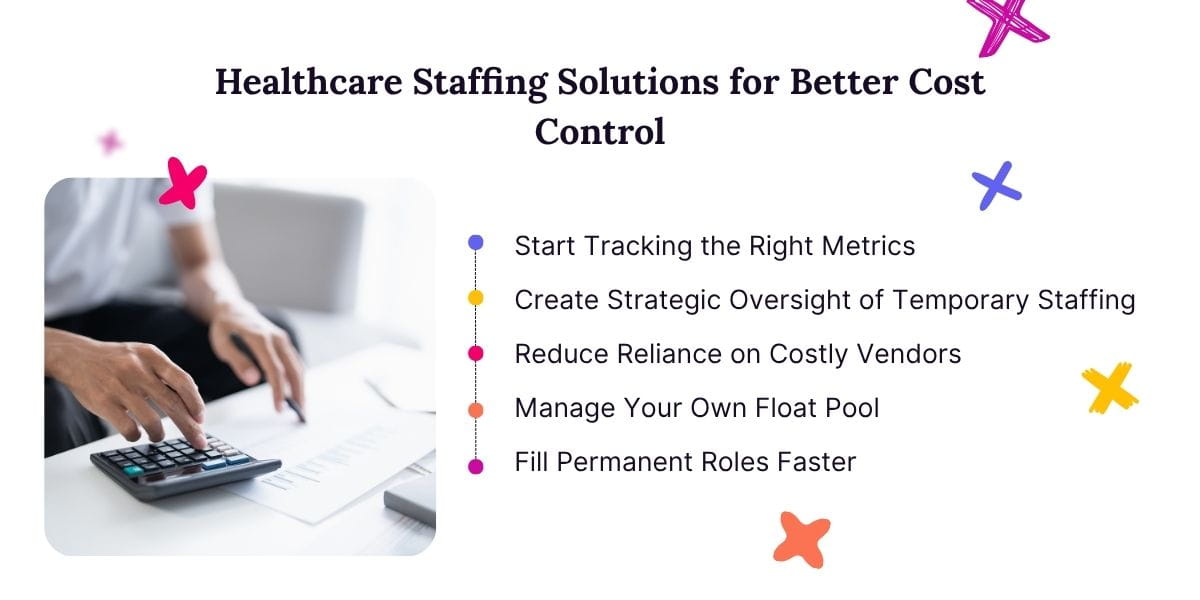
1. Start Tracking the Right Metrics
Effective cost containment begins with a broad set of metrics that expose inefficiencies and create accountability:
- Fill rate by specialty: A high overall fill rate can mask chronic shortages in high-cost, high-acuity specialties like neurosurgery or anesthesia. When those gaps are filled with premium-rate locums, the cost impact is disproportionate.
- Time-to-fill: Longer time-to-fill often correlates with higher rates, as last-minute placements command premium pricing. Tracking this across vendors and departments helps identify where process delays are driving up costs.
- Rate variance: Are similar shifts in the same specialty being filled at significantly different rates? Rate variance across facilities or vendors is a clear signal that standardization is needed
- Agency concentration: Over-reliance on one or two agencies reduces leverage. Tracking spend distribution helps ensure a healthy, competitive vendor panel.
- Internal utilization: How effectively is the organization using internal float pools before turning to external agencies? Low internal utilization is often an overlooked driver of unnecessary external spend.
The goal is to move from reactive reporting to proactive intelligence. With the right data, staffing leaders can spot emerging rate creep, identify vendors who consistently charge premiums without corresponding service levels, and build business cases for strategic investments like internal float pools.
2. Create Opportunities for Strategic Oversight of Temporary Staffing
Temporary staffing is often managed as a series of tactical transactions: a shift opens, an agency fills it, an invoice is paid. In this fragmented model, no one is accountable for the cumulative cost or strategic direction of the program.
Strategic oversight transforms temporary staffing from a reactive expense into a managed asset. This requires three foundational shifts:
Centralize visibility, not just purchasing
Traditional managed service programs (MSPs) often focus on consolidating vendor invoices and enforcing rate caps. True strategic oversight goes further, creating a single source of truth for all temporary staffing activity, whether from external agencies, internal float pools, or even overtime. When all staffing activity is visible in one place, leaders can make intentional choices about which gaps to fill externally and which to address through internal resources.
Establish clear governance and accountability
Strategic oversight requires dedicated ownership. This doesn’t necessarily mean a large team. In fact, one large health system found that a streamlined approach actually freed up their small internal team to focus on higher-value work like permanent recruitment. What matters is that someone is accountable for vendor performance, rate standardization, and program outcomes, rather than these responsibilities falling between departments.
Build a collaborative vendor panel, not just a vendor list
Many organizations maintain lengthy lists of approved agencies but lack the framework to manage them strategically. Oversight means actively curating the vendor panel and replacing higher-priced agencies that resist process improvements with partners who offer competitive rates and operational alignment. As one health system discovered, working with smaller, lower-overhead agencies created opportunities for more flexibility and consultation while reducing costs.
3. Increase Your Vendor Options and Reduce Reliance on Costly Vendors
When a health system relies heavily on a small handful of agencies, those vendors hold significant leverage. Rate increases are difficult to push back on, and suboptimal service levels can be hard to address without jeopardizing fill rates.
Building a broader, intentionally managed vendor panel serves as a natural cost containment mechanism. Competition drives better rates, but only when vendors know they can be added (or removed) based on performance and pricing. The key is to move from a static vendor list to a dynamic panel that is actively curated.
Enter vendor neutrality. In non-neutral programs, a preferred vendor list may actually limit competition. Vendor neutrality means having the freedom to select the best-fit agency for each need based on cost, quality, and availability. This approach signals to vendors that they must earn placements through competitive performance.
Use data to identify and replace high-cost vendors. With clear visibility into spend by vendor, specialty, and time-to-fill, organizations can pinpoint which agencies consistently charge premium rates without delivering corresponding value. Replacing those vendors with more cost-effective alternatives is one of the most direct levers for reducing external staffing costs. One health system was able to transition away from higher-priced agencies that were reluctant to participate in process improvement initiatives, building a stronger vendor panel with expanded access to needed specialties in the process.
4. Manage Your Own Float Pool
External locum tenens agencies serve a critical role in healthcare staffing, but relying on them as the primary solution for all staffing gaps is among the most expensive approaches available. The most effective cost containment strategy is simply to need fewer external locums in the first place. A well-managed internal float pool is the most direct path to that outcome.
The financial impact of an effective float pool is substantial. Every shift covered internally rather than through an external agency represents direct cost avoidance, often at a savings of 30–50% or more depending on specialty and market conditions. Beyond the direct savings, float pools provide greater control over clinician quality, consistency in patient care, and reduced administrative burden compared to managing multiple external vendors.
Start with a dedicated management structure. Float pools fail when they are treated as an afterthought. Successful programs assign clear ownership for scheduling, credentialing, and deployment. This doesn’t necessarily require a large team. In fact, the most effective programs often centralize float pool management alongside external locum oversight, creating a unified approach to all temporary staffing. Having one point of contact for clinicians to check availability, request shifts, and resolve issues dramatically reduces friction for both internal staff and administrators.
Create the right incentives for participation. Physicians and advanced practitioners need compelling reasons to participate in an internal float pool. This means competitive internal rates that still fall well below external agency bill rates, flexible scheduling options, and simplified processes that make picking up extra shifts easy rather than burdensome. When the internal process is smoother than working with external agencies, clinicians naturally prefer internal opportunities.
5. Fill Permanent Roles Faster
Every month a permanent physician role remains vacant is another month of premium-rate locum coverage. In high-demand specialties, that cost can easily reach six figures per vacancy.
To speed up physician recruiting, you need specialized tools. Standard ATS platforms are built for high-volume, transactional hiring. Physician recruitment, by contrast, involves long lead times, complex credentialing requirements, multiple stakeholders, and a candidate pool that is both highly specialized and perpetually in demand. A physician-specific ATS addresses these realities with features like targeted sourcing from physician-only job boards, automated credential tracking, streamlined interview scheduling across busy clinical calendars, and robust reporting on time-to-fill.
FAQs about Cost Containment in Healthcare Staffing
Have other questions about cost containment? Here are several we’ve heard before. You can always reach out to us to talk more about your health system.
How much can a health system realistically save by optimizing locum tenens management?
Savings vary based on current program maturity, but organizations that implement comprehensive approaches, including rate standardization, vendor panel management, internal float pools, and data visibility, can frequently achieve 10–20% reductions in total temporary staffing spend. In large health systems, this translates to tens of millions annually. One system documented over $51 million in total savings, including $18 million in a single year.
What’s the difference between a traditional MSP and the approach described here?
Traditional managed service programs (MSPs) typically focus on consolidating vendor invoices, enforcing rate caps, providing basic reporting, and often restrict the vendors you can use. The more comprehensive approach described here adds internal float pool management, integration with permanent recruitment, strategic vendor panel curation, and unified data visibility across all physician staffing sources. The goal shifts from transactional cost control to strategic workforce management.
How many vendors should be on our panel?
There’s no single correct number, but the right panel balances breadth with manageability. A healthy panel typically includes vendors covering all required specialties and geographies, with enough redundancy to maintain competitive pressure. Many organizations find that 8–15 core agency partners, supplemented by specialty-specific vendors as needed, provides sufficient coverage without excessive administrative burden.
Is an internal float pool feasible for smaller health systems or independent hospitals?
Yes, though the structure may differ. Smaller organizations can focus float resources on the highest-volume specialties or start with a smaller pool that expands over time. The key is matching the scope of the program to organizational resources. A modest float pool that reduces external locum usage by 10–15% still delivers meaningful savings.
What technology is needed to manage this approach?
While specialized workforce management platforms can provide significant efficiency gains, the foundational requirement is data visibility. Organizations need the ability to track temporary staffing spend by vendor, specialty, location, and time period; monitor fill rates and time-to-fill; and integrate temporary staffing data with permanent recruitment planning. Whether this is achieved through existing systems, enhanced reporting, or dedicated platforms, the essential element is having a single source of truth.
How long does it take to implement a comprehensive cost containment program?
Results typically emerge in phases. Rate standardization and vendor panel optimization can show savings within the first 3–6 months. Float pool development and deeper integration with permanent recruitment often take 6–12 months to mature. However, organizations can structure implementation to capture early wins while building toward the full vision.
How do we maintain vendor neutrality while reducing the number of vendors we work with?
Vendor neutrality means the freedom to choose the right vendor for each need based on objective criteria, not that every vendor receives equal volume. Reducing the panel to a curated group of high-performing, cost-effective partners is entirely compatible with neutrality, as long as placement decisions remain based on factors like availability, quality, and price rather than exclusivity agreements or ownership relationships.
See These Strategies in Action
Cost containment in healthcare staffing is ultimately about building a smarter, more integrated approach that reduces reliance on costly external agencies while giving you the visibility and control to make strategic workforce decisions. Tracking the right metrics, creating strategic oversight, curating a competitive vendor panel, managing internal float pools, and accelerating permanent placements has helped organizations like UPMC achieve over $51 million in documented savings.
Ready to see how this approach could help your health system? Syncx offers a free, no-obligation demo that walks through their integrated approach to physician staffing, from unified data visibility to float pool management and beyond.