It’s an unfortunate but true reality in many healthcare organizations today that exhaustion is palpable, the moral injury is real, and the chorus of “we need to do something” has never been louder. Yet, moving from acknowledgment to action is where many organizations stall, overwhelmed by the scale of the problem. This article cuts through the complexity.
Here, we explore targeted interventions in order to provide a roadmap for building a sustainable environment where healthcare professionals can not only survive but rediscover the joy and purpose. Let’s dive in.
A Note to Our Readers: The strategies discussed here are intended to inform organizational leadership and spark meaningful dialogue about systemic change. They are not a replacement for personalized medical or psychological care. If you or a colleague are experiencing symptoms of burnout, depression, or anxiety, we urge you to connect with your organization’s support resources or a licensed mental health professional. Taking care of yourself is the first step in taking care of others.
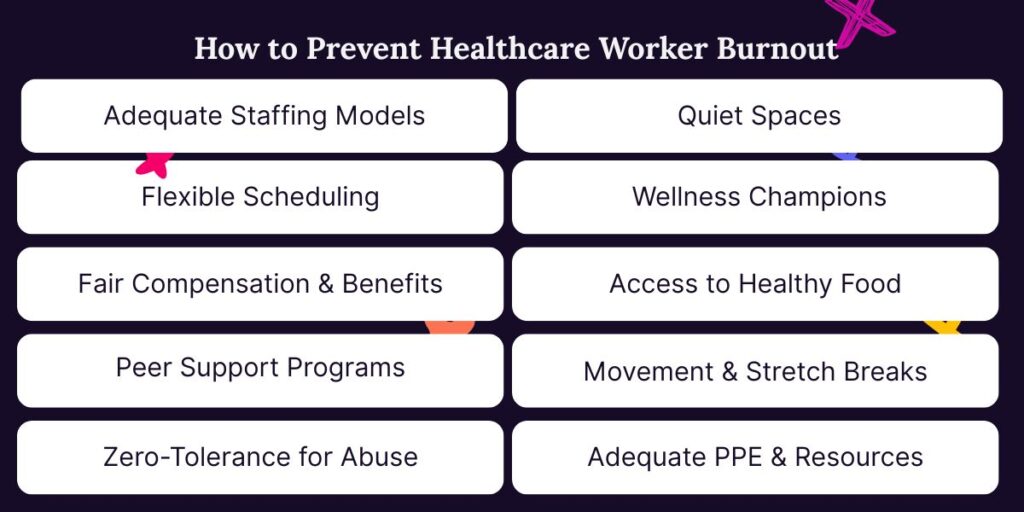
Adequate Staffing Models
According to research from Athena Health, 78% of physicians say that understaffing negatively impacts their work environment. Chronic understaffing is the primary fuel for burnout, creating a relentless cycle of overwork and moral injury as care standards feel compromised. To solve these issues, modern healthcare organizations are now leveraging internal resource pools, often called “float pools” or “internal agencies,” to create flexibility and resilience.
These systems allow for dynamic redistribution of staff based on real-time data. By utilizing dedicated technology platforms to manage these internal pools, hospitals can ensure adequate coverage, reduce mandatory overtime, and give staff confidence that shifts will be properly staffed, directly alleviating a core source of daily stress.
Fair Compensation & Benefits
While passion fuels healthcare workers, fair compensation is a non-negotiable foundation of respect and sustainability. Burnout intensifies when staff feel their immense effort and risk are not reflected in their pay or benefits. Competitive salaries, transparent bonus structures for extra shifts, and comprehensive benefits packages are critical. This can include robust mental health coverage, student loan assistance, and generous retirement contributions.
Importantly, when utilizing internal float pools, paying a premium for that flexibility recognizes the added value and adaptability of those staff members. This tangible investment signals that their well-being is a priority, not an afterthought.
Peer Support Programs
The unique stresses of healthcare are often best understood by those who share the trenches. Formal peer support programs create a structured, confidential space for staff to connect, debrief, and validate each other’s experiences without fear of institutional judgment. These programs train respected colleagues to provide active listening and empathetic support following difficult events or as a routine check-in.
Zero-Tolerance for Abuse
Violence, bullying, and harassment—whether from patients, families, or colleagues—erode psychological safety and dignity, contributing directly to burnout and attrition. A genuine zero-tolerance policy requires actionable protocols, immediate leadership backup, de-escalation training, and clear consequences.
This includes empowering staff to safely remove themselves from abusive situations without fear of reprisal and providing robust support afterward. Protecting the well-being of staff in this fundamental way is a critical declaration that their safety is not a sacrifice for the job.
Flexible Scheduling
Regaining a sense of control over one’s time is a an important tool in the fight against burnout. While research from the Cleveland Clinic shows that flexible scheduling does not always immediately impact burnout, it does directly impact many factors that contribute to it. Inflexible schedules that disregard personal lives lead to resentment and attrition. Moreover, the AMA notes that sustainable scheduling around administrative tasks in particular is important in fighting burnout.
Forward-thinking organizations are implementing flexible scheduling platforms, offering core shift options with flexible start/end times, and creating compressed workweek opportunities. When internal gaps arise, having a well-managed internal float pool allows staff to pick up extra shifts on their terms without forcing mandatory overtime. This level of autonomy and predictability helps staff manage childcare, education, and rest, fostering loyalty and demonstrating that the institution values them as whole people, not just as units of labor.
Quiet Spaces
The healthcare environment is one of constant sensory overload: alarms, conversations, and high-stakes decisions. The absence of a true sanctuary for mental reset exacerbates cognitive fatigue. Designated quiet rooms enforced as no-work, no-talk zones provide physiological downtime.
These spaces function best when equipped with comfortable seating, dim lighting, and perhaps natural sounds. By providing a physical refuge, the organization acknowledges the intense mental labor required and actively invests in restoring its staff’s capacity to focus and empathize.
Wellness Champions
Wellbeing initiatives often fail when they feel like top-down mandates. Embedding Wellness Champions, even establishing a Chief Wellness Officer, creates a grassroots, culturally attuned advocacy network. These champions, trained in basic wellness resources and communication, serve as approachable peer connectors who promote programs, gather feedback, and model healthy boundaries. They make abstract wellness concepts tangible and credible because they are trusted colleagues who understand the unit’s specific pressures.
Access to Healthy Food
During long, demanding shifts, convenient food options are often limited to vending machine snacks or fast food, which can lead to energy crashes and negatively impact overall health. Ensuring consistent access to affordable, nutritious meals is a fundamental yet often overlooked form of support.
Proper fuel stabilizes mood, sustains energy, and sharpens cognitive function. By removing the barrier to healthy eating, the organization supports the metabolic and mental resilience of its staff, sending a clear message that their holistic health matters, even in the middle of the night.
Movement & Stretch Breaks
Healthcare work often imposes prolonged periods of static posture or repetitive motion, leading to musculoskeletal stress and mental rigidity. Actively encouraging and facilitating short, regular movement breaks by posting simple stretch guides in break rooms or even offering on-site yoga or mobility classes provides both physical and mental relief. Physically, it counteracts strain and improves circulation. Mentally, it provides a crucial cognitive reset, breaking the cycle of continuous stress. Integrating these brief pauses into the culture, led by managers or wellness champions, legitimizes self-care as a necessary component of safe, sustainable patient care, not a deviation from it.
Adequate PPE & Resources
Perhaps nothing erodes trust and fuels moral distress faster than the fear of working unprotected. Consistent, reliable access to personal protective equipment (PPE) and essential medical supplies is the absolute bedrock of a safe work environment. Shortages or rationing force healthcare workers into an impossible choice between personal safety and patient care, creating profound psychological trauma. A robust, fail-safe supply chain and clear protocols for resource access are non-negotiable.
Ready to Transform Your Approach to Staffing and Well-Being?
Addressing burnout requires moving from isolated initiatives to a cohesive strategy where operational excellence and human sustainability reinforce each other. It’s about building a system that supports its people as diligently as they support their patients.
If reimagining how you manage flexible staffing is central to your plan, we invite you to see a solution in action. Discover how Syncx’s technology for managing internal float pools and MSP-driven locum tenens can create the stability, flexibility, and control that your teams need to thrive. Schedule a demo today to start building a more resilient workforce.